On August 6, 1945, an American B-29 bomber named the Enola Gay, left the island of Tinian for Hiroshima, Japan. This mission was piloted by Col. Paul Tibbets. Hiroshima was chosen as the primary target since it had remained largely untouched by the bombing raids and the bomb’s effects could be clearly measured.
The U-235 gun-type bomb, named Little Boy, exploded at 8:16:02 a.m. In an instant 80,000 to 140,000 people were killed and 100,000 more were seriously injured.
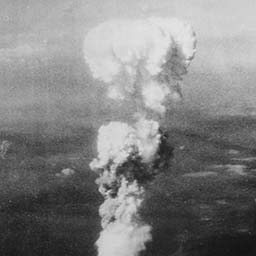
Mushroom Cloud
The mushroom cloud rising over Hiroshima, Japan.
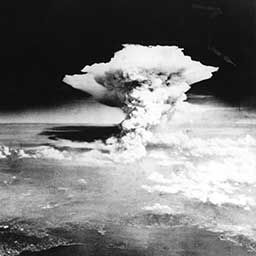
Cloud from fires
The smoke cloud rising over Hiroshima, Japan.
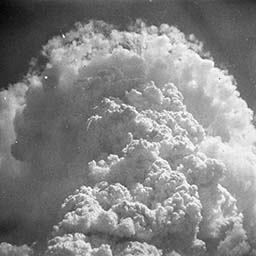
Mushroom Cloud
About 15 minutes after the explosion.
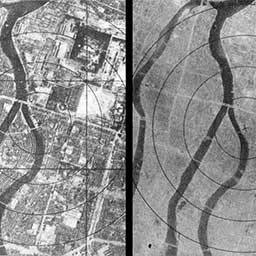
Hiroshima - Before and After
Aerial photographs show ground zero before and after the atomic bombing.
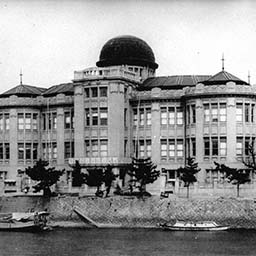
Atomic Bomb Dome Before
The ruins around the Industrial Promotion Hall, now known as the Atomic Bomb
Dome.
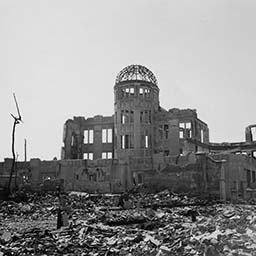
Atomic Bomb Dome
The ruins around the Industrial Promotion Hall, now known as the Atomic Bomb Dome.
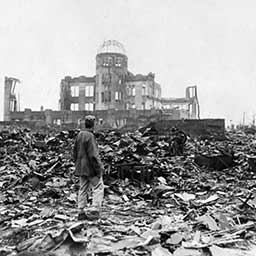
Atomic Bomb Dome
The ruins around the Industrial Promotion Hall, now known as the Atomic Bomb Dome.
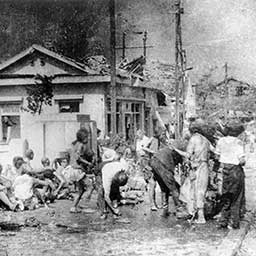
Survivors
Survivors of the atomic attack on Hiroshima, about 3 hours after the bombing.
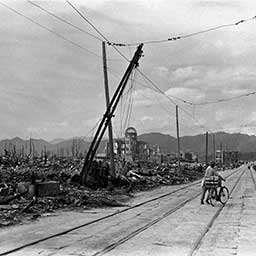
Atomic Bomb Dome
The view here is looking west-northwest, about 550 feet from where the bomb exploded.
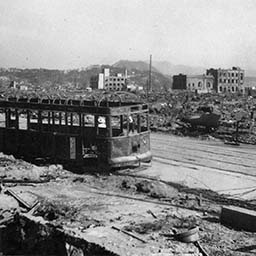
Street Car
A charred tram located about 300-meters from the hypocenter.
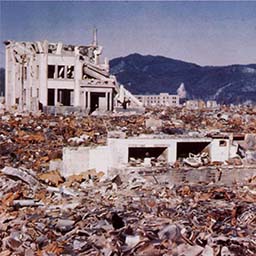
Gas Company Building
The ruins of the Hiroshima Gas Company Building (800 feet from the hypocenter).
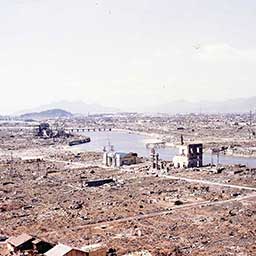
Atomic Bomb Damage
The ruins of the Hiroshima.
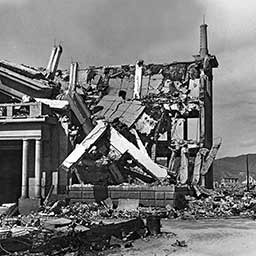
Gas Company Building
The ruins of the Hiroshima Gas Company Building.
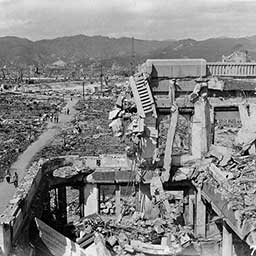
First Bank Hiroshima Branch
The view from atop the First Bank Hiroshima Branch building.
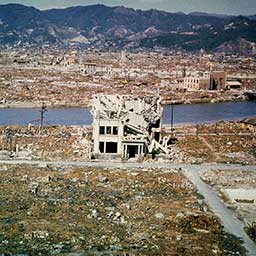
Atomic Bomb Damage
The ruins of the Hiroshima.
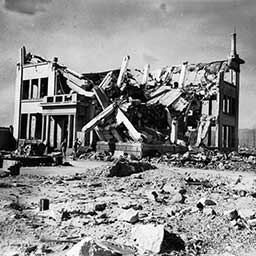
Gas Company Building
The ruins of the Hiroshima Gas Company Building.
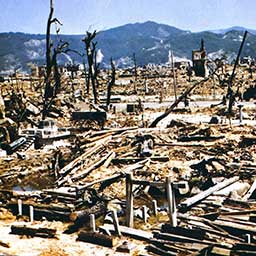
Atomic Bomb Damage
The ruins of the Hiroshima.
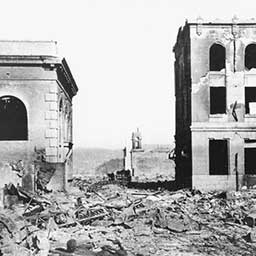
Shopping District
The ruins of the shopping district of Hondori
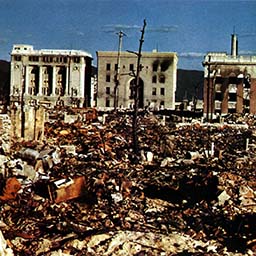
Financial District
View of the bank district, east of Shima Hospital.
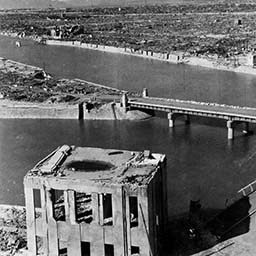
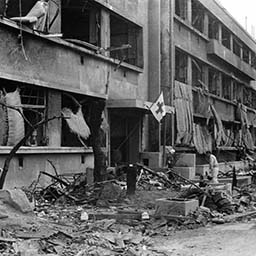
Red Cross Building
This building was very close to the hypocenter.
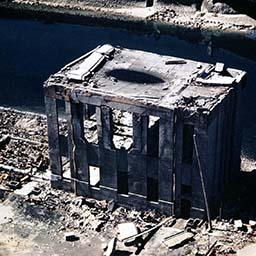
Red Cross Building
The celling had been dented by the blast from almost directly above.
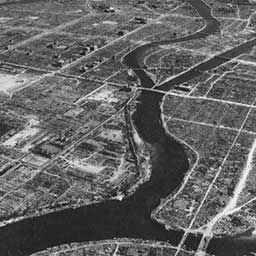
Aerial Photograph of the Damage
The T-shaped Aioi Bridge, the aim point for the Enola Gay.
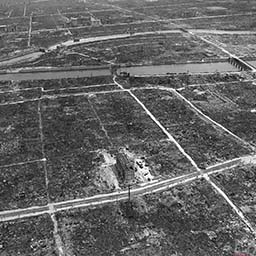
Aerial Photograph of the Damage
Taken one month after the atomic bomb was dropped.
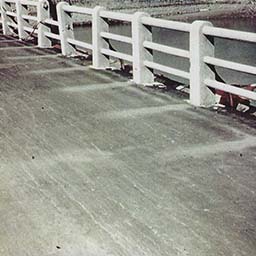
Shadows on a bridge
The shadow of the parapets are imprinted on the surface of the bridge.
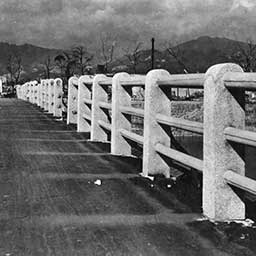
Shadows on a bridge
The shadow of the parapets are imprinted on the surface of the bridge.
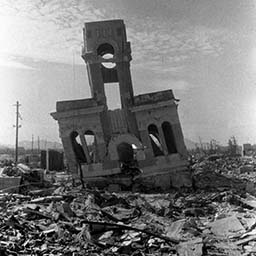
Shimomura Jewelers
Since the structure lacked internal support pillars, the side walls gave way under the atomic blast.

Industrial Promotion Hall
Located close to the hypocenter, the building recieved the blast from almost directly above
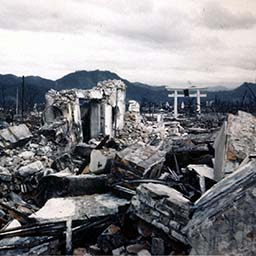
Shima Hospital
The Shima Hospital, which had one-meter-thick walls, succumbed to the bomb’s destructive force.
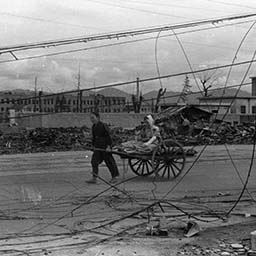
Survivors
A young woman being pulled on Oct. 4 by her aunt on a cart.
First Aid Station
A temporary first-aid station at Fukuromachi Primary School.