Selected Biography
-

The Bomb : A Life
by Gerard J. DeGroot
For decades it dominated the psyches of millions, becoming a touchstone of popular culture, celebrated or decried in mass political movements, films, songs, and books. DeGroot traces the life of the Bomb from its birth in turn-of-the-century physics labs of Europe to a childhood in the New Mexico desert of the 1940s, from adolescence and early adulthood in Nagasaki and Bikini, Australia and Kazakhstan to maturity in test sites and missile silos around the globe. His book portrays the Bomb's short but significant existence in all its scope, providing us with a portrait of the times and the people--from Oppenheimer to Sakharov, Stalin to Reagan--whose legacy still shapes our world. -
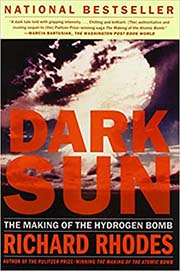
Dark Sun: The Making of the Hydrogen Bomb
by Richard Rhodes
The definitive, often shocking story of the politics and the science behind the development of the hydrogen bomb and the birth of the Cold War. Based on secret files in the United States and the former Soviet Union, this monumental work of history discloses how and why the United States decided to create the bomb that would dominate world politics for more than forty years. -
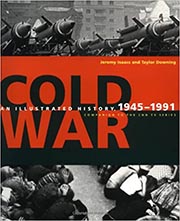
Cold War: An Illustrated History, 1945-1991
by Jeremy Issacs, Taylor Downing
Beautifully designed and illustrated with hundreds of photographs, this companion volume to the CNN documentary series. -

Arsenals of Folly: The Making of the Nuclear Arms Race
by Richard Rhodes
Richard Rhodes continues his work on chronicling the atomic age by explores the final years of the Cold War. -

The Twilight of the Bombs: Recent Challenges, New Dangers, and the Prospects for a World Without Nuclear Weapons
by Richard Rhodes
The final volume in Richard Rhodes’ history of the nuclear age. -

In the Shadow of the Bomb
by Silvan S. Schweber
In the Shadow of the Bomb narrates how two charismatic, exceptionally talented physicists--J. Robert Oppenheimer and Hans A. Bethe—came to terms with the nuclear weapons they helped to create. -

The Cold War: A History
by Martin Walker
This book traces the course of the Cold War from Yalta in 1945 through the Korean War, the Kennedy-Khrushchev confrontations, Vietnam, the "New Cold War" during the Reagan administration, the advent of glasnost and perestroika under Gorbachev and the "year of miracles". -
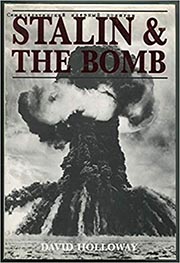
Stalin and the Bomb
by David Holloway
A spellbinding story of the people and politics behind the development of the Soviet atom bomb. Based on interviews with participants and research in newly opened archives, the book reveals how the American atomic monopoly affected Stalin's foreign policy, the role of espionage in the evolution of the Soviet bomb, and the relationship between Soviet nuclear scientists and the country`s political leaders. -

The Advisors: Oppenheimer, Teller, and the Superbomb
by Herbert F. York
A contributor to the development of nuclear arms, Herbert F. York writes this book about the the first hydrogen bomb or superbomb from an insider's perspective. -
The American Atom: A Documentary History of Nuclear Policies from the Discovery of Fission to the Present
by Philip L. Cantelon, Richard G. Hewett, Robert C. Williams
An extensive collection of primary documents that tells the story of atomic energy in the United States from the discovery of fission, through the development of nuclear weapons, to the Cold War, and attempts at control of nuclear weapons. -

Restricted Data: The History of Nuclear Secrecy in the United States
by Alex Wellerstein
The book explores the complex world of keeping nuclear secrets, secret. -

Physics and Nuclear Arms Today
by David Hafemeister
Physics and Nuclear Arms Today is a collection of the best articles written about the arms race which appeared in Physics Today between 1976 and 1989. The articles explore a wide variety of topical issues such as the effects of nuclear weapons, nuclear testing, offensive strategic weapons, defensive SDI or Star Wars weapons, nuclear nonproliferation and the social responsibility of scientists as well as a wide selection of articles which chronicle the history of nuclear weaponry. -
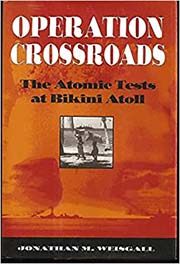
Operation Crossroads: The Atomic Tests at Bikini Atoll
by Jonathan M. Weisgall
This book is a comprehensive and thoroughly documented historical account of the two atomic bomb tests conducted by the United States at Bikini Atoll in the Marshall Islands in 1946. -
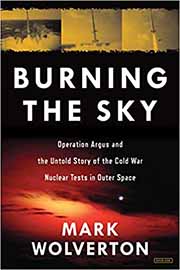
Burning the Sky: Operation Argus and the Untold Story of the Cold War Nuclear Tests in Outer Space
by Mark Wolverton
The book examines how scientists conducted nuclear tests in the upper atmosphere to see if it might be used as a nuclear deterrent. -

The Day We Lost the H-Bomb: Cold War, Hot Nukes, and the Worst Nuclear Weapons Disaster in History
by Barbara Moran
This book explores the 1966 mid-air collision off the coast of Spain that resulted in the loss of four H-bombs. -

Ethel Rosenberg: An American Tragedy
by Anne Sebba
This book explores the story of Ethel Rosenberg, who was executed for conspiracy to commit espionage for the Soviet Union. Using letters from prison, this book offers deeper insight into her life and death. -

The Man Behind the Rosenbergs
by Aleksandr Feklisov, Sergei Kostin, Alexander Feklisov, Serguei Kostine
Former KGB operative Feklisov's memoirs detail his activities supervising American engineer Julius Rosenburg and English physicist Klaus Fuchs. Feklisov also describes his role in the Cuban Missile Crisis, serving as a mediator between Kennedy and Krushchev. -

The Brother: The Untold Story of Atomic Spy David Greenglass and How He Sent His Sister, Ethel Rosenberg, to the Electric Chair
by Sam Roberts
In 1951, Julius and Ethel Rosenberg were tried for and convicted of conspiring to steal atomic secrets. In 1953, their execution tore American apart. One man doomed the Rosenbergs: David Greenglass, Ethel Rosenberg's brother, the young army sergeant who spied for the Soviets at Los Alamos during World War II and whose testimony later sealed his sister and brother-in-law's fate. -
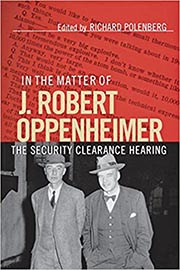
In the Matter of J. Robert Oppenheimer: The Security Clearance Hearing
by Richard Polenberg (Editor)
This book presents part of the 1,047-page transcripts of the 1954 hearings of the Atomic Energy Commission's (AEC) Personnel Security Board that resulted in the revocation of Robert Oppenheimer's security clearance. -

In the Matter of J. Robert Oppenheimer: Politics, Rhetoric, and Self-Defense
by Rachel L. Holloway
In contrast to historical and political explanations of the Oppenheimer case, Rachel Holloway explores the role that rhetoric played in Oppenheimer's removal from government service. In doing so, the author draws attention to the symbolic nature of politics and character and highlights the significant interaction of political and scientific terminologies in American discourse.